
Automotive Clips and Plastic Fastening Solutions
Automotive clips for door panels, bumpers, bonnets, fenders, boot, windscreen cowls, glass and headliners. Our B2B catalogue lists more than 4,000 clip items by OEM reference and vehicle model.
Where are automotive clips used?
An automotive clip is a plastic or metal fastener that holds body panels, trim and cladding in place without screws or adhesive. Door panels, bumpers, bonnet insulation, wheel-arch liners, windscreen cowls and glass mouldings are the most common locations. Because clips often break on removal, they are a routine consumable in service and body repair work. Starklips Automotive has supplied automotive clips from Turkey since 1996 to aftermarket companies, distributors, wholesalers and body repair workshops.
Door Panel and Trim Clips
Clips for door cards, interior trim, headliners and sun visors.
Bumper, Bonnet and Fender Clips
Clips for bumpers, bonnet insulation, wheel-arch liners and grilles.
Glass, Cowl and Moulding Clips
Clips for glass mouldings, windscreen cowls, weatherstrips and trim strips.
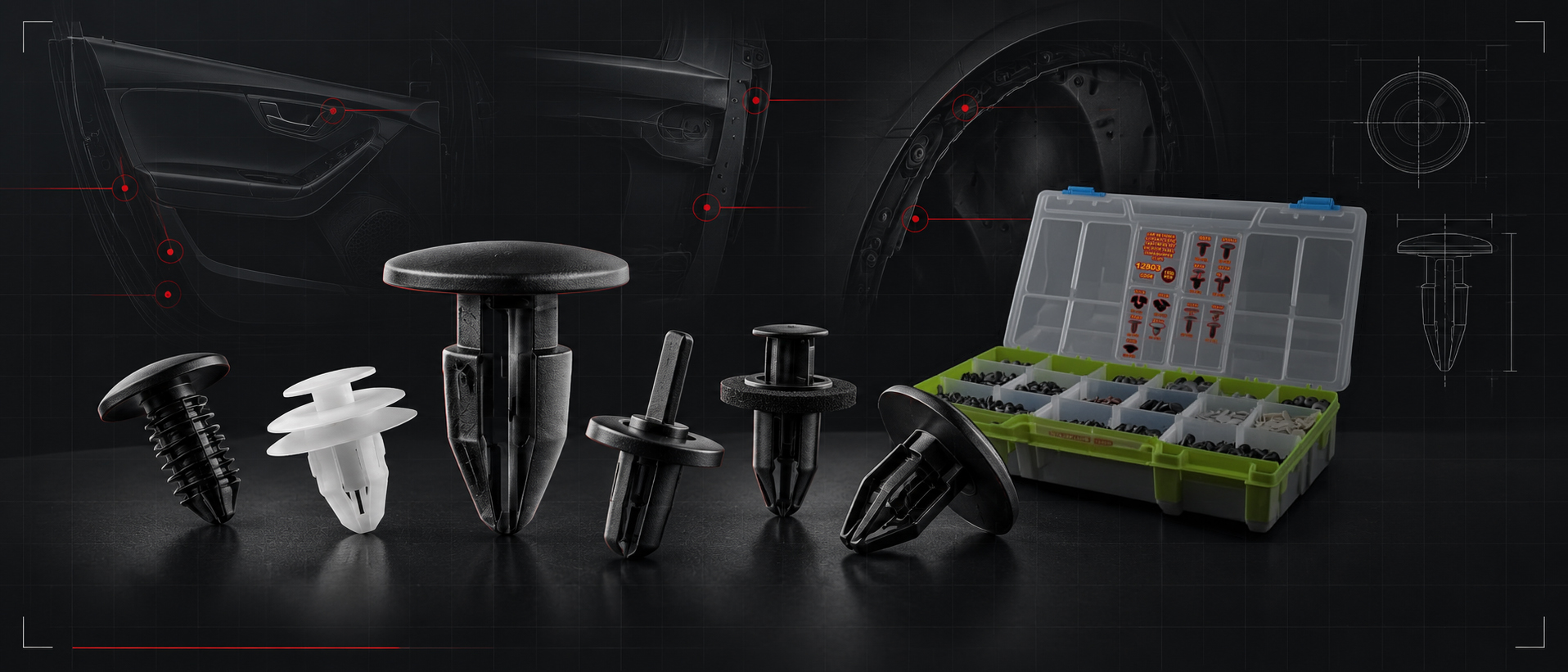
Choosing the right clip: OEM reference and dimensions
The right clip is determined by OEM part number, vehicle make, model and year, mounting hole diameter, panel thickness and head type. Our catalogue covers OEM-referenced clips for many makes, including Ford, Volkswagen, Mercedes-Benz, Toyota, BMW, Fiat, Renault, Honda, Peugeot and Hyundai. Assorted clip sets are also available for workshops and wholesale buyers.
OEM Reference Matching
One-to-one clip matching by the original part's OEM number.
Clip Assortment Kits
Kits of frequently used clips for service and body repair workshops.
Wholesale and B2B Supply
Wholesale supply for distributors, parts retailers and service networks via the B2B portal.
Clip types by body and head design
Even at the same mounting point, clips can have different designs. Knowing the clip type makes it easier to order the right part and fit it correctly.
The three designs below are the clip types most often seen in service and body repair work. The original part decides which type should be used.
Push-type clips
Pressing the centre pin spreads the body and locks it in the hole. Pulling the pin back releases it. Common on lower bumpers, wheel arch liners and engine undertrays.
Fir-tree clips
The ribbed body is pushed into the hole and resists pulling out. Widely used on door panels, bonnet insulation and wiring harnesses.
Screw and nut type clips
Plastic or metal clips that are tightened with a screw or nut. Preferred where a stronger hold is needed, such as wheel arch liners, bumper mounts and number plates.
How to measure and remove automotive clips
If there is no OEM number, measuring is the safest way to match a clip. First measure the mounting hole diameter with a caliper. Then measure the total thickness of the panel and the layer behind it. The head diameter and body length also help with matching. If you still have a piece of the broken clip, you can use it as a sample.
The most common mistake during removal is forcing the clip with a screwdriver. This breaks the clip and can damage painted surfaces or trim panels. A plastic trim removal tool and clip removal pliers protect the panel while you work. Old clips, or clips that have hardened in cold weather, break easily during removal, so keeping spare clips on hand saves time.
When measuring
Hole diameter, panel thickness, head diameter and body length. These four measurements are enough to match most clips.
The right removal tool
A plastic pry tool and clip pliers protect paint and trim. These tools are part of our service tools product group.
When to replace a clip
Replace a removed clip if it is loose, cracked or has flattened ribs. Otherwise the panel may rattle or cause wind noise.
Frequently asked questions about automotive clips
What is an automotive clip?
A plastic or metal fastener that secures panels, trim, upholstery, bumpers and cladding on a vehicle. It can be fitted and removed without screws or adhesive.
What types of automotive clips are there?
By location, the most common types are door panel clips, bumper clips, bonnet and wheel-arch liner clips, fender clips, cowl and glass moulding clips, headliner and sun visor clips, and wiring harness clips.
How do I choose the right clip?
The OEM part number is the most reliable route. Without it, combine vehicle make, model and year, mounting hole diameter, panel thickness and clip head type.
Plastic or metal clips?
Plastic clips are used for most trim and cladding applications; metal clips are preferred for some body and bracket fixings that need higher retention. Match the material of the original part.
How do I order clips wholesale?
Trade customers can apply for a dealer account on our B2B portal, search products by OEM reference and place orders. Our sales team can also help with technical matching. International distributors and importers can contact our sales team with OEM numbers or vehicle details for clip matching, product lists and export enquiries.
Can a broken clip be replaced with a different clip?
An alternative clip can be used if the hole diameter, panel thickness and head type match. However, the holding force may differ, so a clip matched to the OEM reference is the safest choice.
Can I reuse a clip after removing it?
Some clips that come out intact can be reused. However, plastic clips often stretch or crack during removal. A clip that has lost its grip can cause vibration and noise, so replacing it is recommended.
Where can I find a clip's OEM number?
The OEM number is listed in the vehicle manufacturer's parts catalogue. Authorised service centres and parts dealers can find it using the VIN. Send us the number and our sales team will match the clip for you.